
Let's Make Something Impossible.
It's time.

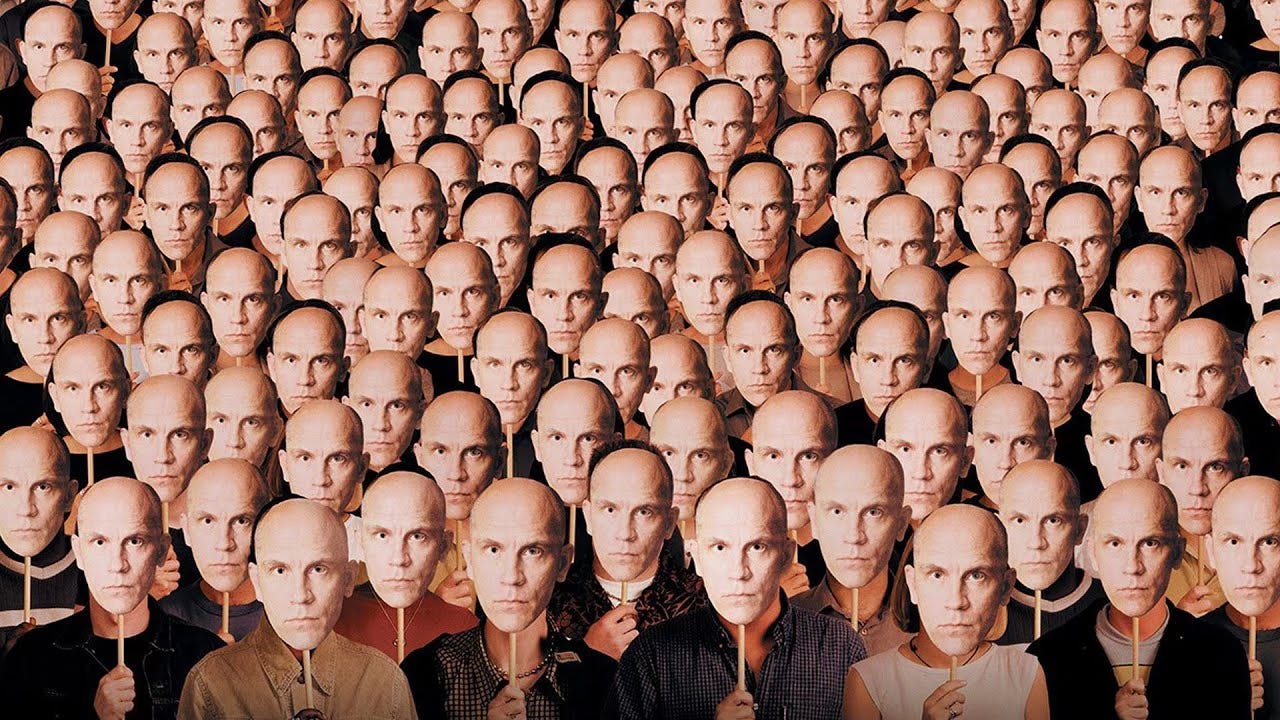
I remember exactly how I felt when I saw Being John Malkovich for the first time.
I was a broke indie filmmaker in my late twenties. I walked out of the theater and I couldn’t speak for about fifteen minutes. Not because it was the greatest film I’d ever seen. Because it felt like permission.
Permission to be strange. Permission to be specific. Permission to make the movie that only you could make, because no one else had your particular damage.
For a few beautiful years in the late-90s and early 2000s – with films like Eternal Sunshine of The Spotless Mind, Donnie Darko, Ghost World – it really felt like the door had swung open. The indie film movement had stormed the castle. The weird kids were winning. And those of us who had been grinding away with our 16mm Arriflexes, our Canon XL1s, and our maxed-out credit cards thought: Finally. These are the films we get to make now.
You know what happened next.
Marvel happened. Then more Marvel. Then the sequel to the Marvel. The door didn’t just close – they bricked it up and replaced it with a wall.
Now look. I love a good blockbuster. I have cried during at least one Marvel movie. (True story.) But somewhere along the way, “safe” became the only strategy, and “original” became a liability. The polish stayed. The pulse faded.
This isn’t news.
The news is that the wall no longer exists.
Not because Hollywood changed its mind. They didn’t. They won’t. That’s fine. We don’t need them to.
The tools that used to live behind studio gates – the visual effects, the sound design, the ability to actually realize an ambitious vision without a $40 million greenlight and a roomful of executives telling you to make it more like the last thing – those tools are now sitting on your laptop.
They’re ready. It’s time.
Let me re-phrase that: they’re almost ready. And it’s almost time.
But we’re close enough that right now is when we all need to be in pre-production. Right now is the time to be building your characters, fleshing out your world, writing your story, bringing your vision to life in your mind and on the page.
Because in about… oh, I dunno, seven minutes… the AI tools are going to be good enough to make your vision a reality. Whether it’s a space opera or a quiet indie comedy… the technology to empower you to tell whatever story you want is about to arrive in force.
Last week I had the pleasure of speaking with Leon Silverman of MovieLabs. He’s one of the sharpest minds working at the intersection of technology and storytelling. He said something that I keep turning over in my head.
He said we need to use AI “to make a future worthy of our past.”
A future worthy of our past.
Not a future of cheaper content farms. Not a future of algorithmic slop dressed up to look like cinema. A future that honors what film has always been at its greatest – and then dares to go further.
That’s the assignment.
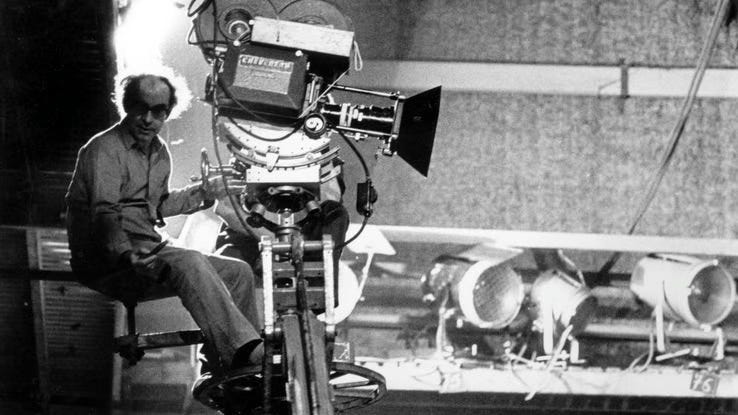
Here’s the historical pattern, and it never fails: every time a new technology democratizes filmmaking, the first wave is noise. Then someone comes along and makes something so specific, so personal, so theirs that it changes everything.
Godard did it with jump cuts. Cassavetes did it with handheld. Rodriguez did it for $7,000. Linklater did it with Slacker. Someone did it with every tool that everyone said would cheapen the art form.
Someone is going to do it with this.
And, no, even though they’re all quietly working on it: it isn’t going to be a studio. It’s going to be someone working alone, or nearly alone. Someone who has a story that no development executive would ever greenlight. A story too big, too strange, too personal, too specific to survive a notes process.
The Charlie Kaufman that doesn’t need a Spike Jonze. The Spike Jonze that doesn’t need a studio. The filmmaker with the story that only they could tell, finally with the tools to tell it.
That person is out there right now.
Struggling with the still-not-quite-good-enough-but-almost-good-enough tools and wondering if any of this is worth it.
It’s worth it.
The films that are going to matter in this new era won’t be the ones that look most like what Hollywood already makes. They’ll be the ones that could only exist because of this moment. Because the gates are open and the gatekeepers are confused and the tools are miraculous even when they’re maddening.
This is our moment.
Nobody’s minding the gate. And nobody’s handing out permission.
Now go make something impossible.
What’s the film you’ve always wanted to make that Hollywood would never touch? I mean it when I say “Let’s make something impossible.” So if you’re a creative with a vision, reach out: tom.danon@gmail.com